This is a busy district general hospital in rural Zimbabwe with a long tradition of hosting students. Murambinda offers a wonderful opportunity to students of any health professions to learn via elective placements. It has full outpatient facilities, x-ray, ultrasound, with paediatric, maternity, general adult and TB wards comprising around 120 beds. It acts as a hub to around 20 nurse lead rural clinics. It has played a pioneering role in expanding the provision of anti-retrovirals to rural areas.
- Requests for electives are best made at least 6 months before the student needs to start.
- The hospital can ensure students are met at Harare Airport and can arrange transport to and from the Airport..
- The Hospital will provide accommodation within the Hospital grounds.
- Hosting two students together is easier for the hospital than one provided that they are of the same gender and willing to share accommodation.
- The Hospital will charge for accommodation and utilities.
For informal enquiries please email jconnoll215@gmail.com
Images of a student elective visit by Matthew Anderson, Alastair Watson and Henry de Fresne.
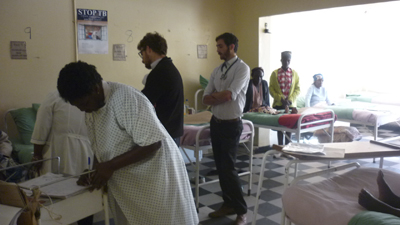
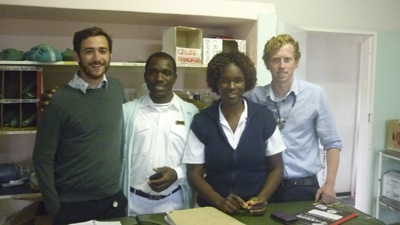
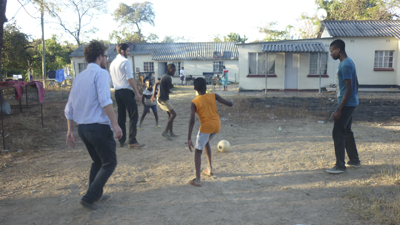
If you wish to apply please write to the Hospital Matron care of
cephasmudzi@gmail.com (Hospital Donor Secretary) copying in
jconnoll215@gmail.com (John Connolly, Friends of Murambinda Hospital Trustee and Student elective co-ordinator), and
f.m.h@live.co.uk (Michael Thompson, Chair, Friends of Murambinda Hospital)
Returning students are warmly invited to join with Friends of Murambinda in the UK and maintain their link with the Hospital, which has benefited greatly in the past from their experience.
Please view this presentation from KH who had her elective at Murambinda in 2025.
The transcript is below.
In December I travelled to Zimbabwe for my elective placement at Murambinda Mission Hospital. It was an experience that marked me in many different ways, and I hope stays with me and the ways I look at not only medicine, but how culture, poverty, racism and inequality in healthcare intersect. I was greeted at the airport by the big grins of Mr Mudzi and Beverley, two faces of admin I became most familiar with during my stay. In the hospitals Ute, we drove 3 hours southeast to Murambinda, a village located in the Buhera district of Zimbabwe, stopping at watermelon vendors and meat carts along the way. It was the wet season in Zimbabwe, so the days were sweltering hot, and often the night brought the most intense thunderstorms. This was the bungalow I stayed in, I had a whole house to myself, and it looked out onto this magnificent frangipani tree, with a family of kittens that always played underneath it, except for when they were exploring the hospitals corridors. The weather conditions were also the catalyst for the frequent power line faults and outages in the area. For the first week, there was no power or running water in the town. This was considered quite normal for the season, although the fault was particularly bad this time, and access to electricity continued to be unreliable the entire time I was there. The hospital had 1 generator and had in the previous years, acquired funding for solar panels. However, after 5 days of no power, the generator ran out of fuel, and with the thunderstorms, solar power was also insufficient. This is the neonatal resuss machine, obviously out of action with no power. On my last day there was a tragic incident with a meconium aspiration that needed nasal suction, and without power, all there was a penguin sucker, that was unable to clear the meconium properly. This was the time I felt most helpless. It is amazing to me, how many times a day you can realise the privilege of your countries healthcare system. A primary discussion of the hospitals finance team that week was – “where can we get the money for more fuel for the generator”, and even then, the systems are slow, there are barriers to transporting the fuel, and there’s every chance the same problem will arise the next week. Murambinda Mission Hospital was founded in 1968 by the Sisters of the Little Company of Mary. It serves as the designated district hospital for the Buhera District, which includes a population of around 300,000 people. The Buhera district is prone to irregular rainfall and poor harvests. As a consequence, poverty, food shortage and illness are a huge burden to the area. The hospital was supported by MSF, particularly through HIV/AIDS and Tuberculosis initiatives in the early 2000s, as well as establishing the Therapeutic Feeding Centre for malnutrition in children. The withdrawal of MSF funding in previous years has placed immense financial pressure on the hospital. Whilst the government contributes to the salaries of the staff, nearly all of the projects, buildings, upgrades and maintenance of the hospital are funded by grants and fundraising. My usual day started with choir practice in preparation for the hospitals upcoming Mary Potter Day, a celebration of the Founder of the Little Company of Mary. I would wake up and run by the beautiful river that passed through the village, and then at 7:30 join the sisters to sing, who were very encouraging of my sub-par attempts to sing in Shona. Ward rounds then began with 1 of the 4 doctors working at the hospital (shown is Dr Madzoze at the xmas party). There were no teams, no interns, no one pushing a computer. There was one of the RMO/Registrar equivalents, all trained in Zimbabwe’s capital who have compulsory postings to rural and remote areas for 1-2 years. They were brilliant, overworked, underpaid doctors, some of whom had grown up in nearby villages and really understood the concerns and hardships of their people, and entire healthcare system. We would start in Maternity, where there were 3 rooms each with 8 beds – split into post-Caesar/acute observation, stable, and the Kangaroo ward with preemies and neonates failing to put on weight. We would then go to the children’s ward, where presentations ranged from scorpion bites, malaria, burn wounds, some cases of pneumonia, the occasional suspected TB. There was a 6-week-old newborn admitted with a broken femur, his mother had cerebral palsy and severe cognitive impairment. But there were no social workers and no NDIS support for this family. We would finish with the women’s and men’s adult wards, strokes, malaria, opportunistic infections and cancers from in AIDS patients. The nearest CT scan was also in Mutare, so thrombolysis was a fairytale, and there was nothing much to do for suspected strokes. In between eating sadza and braai, I felt extremely lost and back to square 1 in my first week. I had almost no understanding of HIV/AIDS and multitude of opportunistic infections that come with it. I didn’t grasp the history and drug regime dilemma of TB, or even the strains of malaria. I have had numerous lectures on antimicrobial resistance, but none when to treat when your hospital has no ability to test for cultures. Nearly all patients were given antibiotics if a bacterial infection was suspected. Wednesdays was the designated day for the elective caesareans. With no power or electricity, we were scrubbing in with buckets of bore water from the local water hole, a process that also pushed operation time back by 3 hours as we waited for a driver to collect the water. There were two operating theatres, one that was kept sterile for Caesars alone, and another used for all MUA’s, abscess drainages and every other small procedure. This is a photo from the day the ophthalmologist visited and did 25 cataract surgeries in one afternoon! After choir practice in the morning, the hall would be transformed into the outpatient clinic for the afternoon– a combination of a walk-in clinic and an ED. Patients and their families would walk in clutching tattered paper booklets that held all of their medical records and proof of payment. There were countless broken bones, assault cases requiring doctor approval for court, hypertension, and diabetes often uncontrolled due to poor compliance. Compliance in this instance was most commonly due to an inability to afford the medicine or a misunderstanding of the condition. Tuberculosis In my final days in Murambinda, I read John Greens: Everything is Tuberculosis”. A brilliant book that explores the history of TB, with anecdotes from his time in Sierra Leone. At one point, he writes: “TB doesn’t just flow through the river of injustice; TB broadens and deepens that river”. Whilst I did not feel like I was seeing an immense amount of active TB cases, we were testing patients daily with sputum swabs for smear microscopy, which can only detect 50% of positive cases. I saw one child with TB who had returned after 6 months for a follow up with the visiting paediatrician, his condition had declined significantly and his Xray showed advanced disease. The visiting doctor had to explain to the father that his current drug regime that he had already been on for 6 months, had not helped, and they were going to have to not only pay for the testing of drug sensitivities, but also likely commence another, more potent, and more expensive course of treatment. Conclusion My time in Murambinda was such a privilege to experience and I am forever grateful to the community I got to know. I wish my time had been longer and I hope to return someday, when I can be more useful! I hope to raise funds for Murambinda Mission Hospital upon returning home.
KH 2025
I spent some time at a rural hospital in Zimbabwe undertaking my midwifery elective. You may also have gathered that I was inspired, awed and touched by the people I met and privileged to experience the kindness of the Zimbabwean people as well as the provision of excellent maternity care in an incredibly resource poor environment. Strength, humour, spirituality, acceptance and fortitude were, however, in rich supply. I witnessed the tangible and vital part that Murambinda Mission Hospital (MMH) plays in making birth safer and in reducing the significant maternal and infant mortality and morbidity which is part of life in Africa.
JH Midwifery student 2012
I would like to thank you so much for affording me the opportunity of going to Murambinda to visit the CARC, it truly was a thoroughly enjoyable and eye-opening experience, albeit quite harrowing when witnessing the living circumstances which many of the children have to endure.
GM Medical Student 2012
A typical day for us at Murambinda would start with morning prayers at 7:30, and even this was very interesting for us. Just seeing all of the hospital staff gather together to sing was surprising, and immediately reminded us how different African culture is! This would be followed by ward rounds with whichever doctor was on duty. For me this was frequently the most useful part of the day in terms of learning. Usually, we would visit every single inpatient in the hospital, and the doctor would take us through the more interesting cases, and take us through the presentation and treatment of conditions you would rarely see back home, such as malnutrition and TB. Also, the doctors got into a routine of handing us the patient’s x-rays as we came to them, which was very helpful, and introduced us to images of varying quality, rather than the uniformly pristine ones you would get at home. This probably helped our learning though, because we were forced to use what we had. We had a quick break after rounds, then either went to the minor procedure room or the OPD. Minor ops was where we probably spent the most time out of anywhere in the hospital, and we observed a huge variety of procedures, and helped out with things like catheters, incision and drainage and applying casts. Also, there would occasionally be a caesarean section on in the main theatre, and we would make an effort to observe that if possible.
For me personally, the most interesting part of the elective was learning about HIV. This was a unique opportunity to see the more obscure conditions that occur with CD4 counts below 200, because you would only really see that sort of thing in textbooks back home. We were very lucky to see cases of Kaposi sarcoma, cryptococcal meningitis and oesophageal candidiasis, among others. Also, the indications and side effects of the principal antiretroviral drugs are now burned into my brain, because I have seen them being prescribed, so I can associate them with particular patients, as opposed to pages in a textbook. But aside from dry learning, this also gave us the opportunity to see the human cost of this disease. The sheer number of patients coming through the HIV clinic always astonished me, even more so considering they were usually in and out of the room in less than a minute. Thankfully, the disease was well controlled in the majority, but just seeing the huge proportion of people affected gave me some idea of the huge toll it takes on the country.
In terms of things that could be alleviated by greater funding, a few things jumped out at us. One thing that was very obvious as we walked round the hospital was that the wheelchairs were in a universally bad condition. The majority had flat tyres, and some were missing wheels entirely. You could see that this made it more difficult for families to care for their ill relatives, so just a few new wheelchairs may make a big difference. Also, something we noticed was that families were often left to grieve in public spaces, while patients and staff carried on around them. Perhaps building a family room or similar might help avoid this.
Overall, this was a really remarkable experience for us. I felt very privileged to be granted access to the hospital, and it was an amazing insight into how medicine is different in a resource-poor setting. And, the fact that we managed to travel around an amazing country at the same time was a great bonus. I would not hesitate to recommend it to any medical student who is interested in overseas electives.
TB Medical Student from Ireland, July 2015
Murambinda Mission Hospital Elective: September-November 2016
Excellence, Equity, Family. These are the three words which would best describe my experience at Murambinda Mission Hospital. As a Zimbabwean studying medicine in Australia, choosing to do my elective in Zimbabwe was an exciting, rewarding and humbling experience. Murambinda Mission Hospital as the main district hospital in the Buhera district provided the best opportunity for me to explore more on my health equity selective elective for global health with a particular interest in maternal health. The MMH staff welcomed and embraced me with warm and open arms as l embarked on my elective. I felt right at home as part of the Murambinda Mission Hospital family. A typical day would start at 7.30 am with morning prayers in the wards. l was quite taken back and touched by the warmth of the staff in sharing these moments with the patients before the beginning of each working day. This would be followed by the daily ward rounds with the doctors at the hospital. The main wards included the general male and female wards, the paediatric ward, the maternity and labours wards and the isolated TB wards for both the male and female wards. It was a brilliant opportunity to learn and consolidate on the knowledge which l already had as a student and learnt new information with a particular focus on conditions and diseases which are prevalent in Zimbabwe. I spent the majority of time in the small theatre for minor procedures, the main theatre to observe caesarean section operations and the outpatients’department which provided an excellent opportunity for history taking and physical examinations. The staff at the hospital were more than willing to teach and share their knowledge and experiences in the clinical setting and in the community. The patients were also more than happy to assist in improving my clinical skills as a student through history taking and physical examinations. I also had the excellent opportunity to observe primary health care at the local clinics in the district where the majority of patients in the district make first contact with a health care service before being referred to the district hospital if the cases cannot be managed at a clinic. Some of the cases which were managed at a clinical level include antenatal care for uncomplicated pregnancies, wound dressings, resupplying medications such as for hypertension and diabetes and postnatal care.
Overall my experience at Murambinda Mission Hospital was worthwhile in understanding the various conditions affecting the Zimbabwean population for communicable diseases such as HIV/AIDS and TB as well as non-communicable diseases such as diabetes mellitus and hypertension which are steadily on the rise. This experience also offered me the platform to observe the clinical aspects of the health care system in my own home country with the hopes of one day being able to invest back into the community and the healthcare system in Zimbabwe. My elective at MMH offered me more insight into the provision of healthcare to the best of the hospital’s capacity despite limitations in resources and gave me a better appreciation of health equity in the provision of health care services to the community with no discrimination of patients but with equitable treatment of every patient who came through to the hospital.
P R, Year 3 Medical Student, Australia
Medical Student Elective June 2019
Having been involved in raising funds for MMH throughout 3rd year I was raring to get stuck into life in the hospital. Three of us spent 4 weeks at the hospital and we honestly couldn’t have asked for a better experience. From the moment we arrived at the hospital we felt instantly at home and all the doctors and nurses couldn’t have done enough for us.
We spent our days in the hospital and also got the opportunity to visit and help at clinics that served those who couldn’t make the trek into the hospital itself. Most often, our days began at 8am with ward rounds. Following this, we went to the main theatre where we got to scrub in and help with c sections, or we went to minor ops, OPD or Room 12 where we took bloods or distributed STAT medications. The FCH offered us exposure to paediatrics and obstetrics & gynaecology and on Tuesdays there was a malnutrition clinic that we attended as well.
No matter what area of the hospital we were in, the doctors always gave us the chance to get stuck in with up close hands on experience. These opportunities really shaped my learning. I was quite nervous to begin with, but I can definitely say my confidence grew during the 4 weeks because we were placed right in the middle of everything that was going on. We were scrubbed in assisting with c sections, helping to run the OPD, taking bloods, placing in IV cannula and so much more. I found the act of actually doing things extremely helpful to my learning and am very grateful for the confidence and trust the doctors had in us.
As well as that, the cases seen at this hospital are so different to those that we would see at home: such as patients with HIV and TB. The doctors at the hospital were experts in these fields and are currently carrying out research in these areas. They provided detailed teaching for us and up to date statistics. HIV treatment and surveillance is only improving, and, in fact, large numbers of mothers who are HIV positive but have low viral loads due to HAART adherence and compliance are in fact having babies that are themselves HIV negative. This gave us all great hope that an end to the disease may be in sight.
One of the most challenging aspects of the elective was witnessing the inequality that surrounds healthcare when comparing this rural hospital to home. The lack of money and subsequently the lack of investigations available to make a diagnosis pose great challenges to the practice of medicine. We learned to rely a lot more on our clinical examinations and history taking because a lot of the time an investigation that would be seen as routine in Ireland just wasn’t an option here. In some instances, patients couldn’t afford some investigations such as an XRAY and so, the Dr would have to treat blindly. This was specifically difficult when it came to diagnosing pulmonary disease. At the same time it confirmed the skill and competence of the doctors working at the hospital as we watched them in awe diagnosing and treating these patients with success.
What I would love to be able to provide for the hospital are some wheelchairs. The majority of wheelchairs available are too small, broken, missing foot rests or missing tyres. From personal experience I found this very upsetting to see. Patients who are unable to even walk or who have trekked for miles to reach the hospital still struggle to mobilise independently even while in a wheelchair. While in hospital one feels immense vulnerability and so it is our responsibility to maintain the patients dignity. Having even just the ability to mobilise independently provides that little boost that someone may just need. Another basic adjunct to the hospital would be some pillows or curtains to provide the patients with some privacy while on the wards.
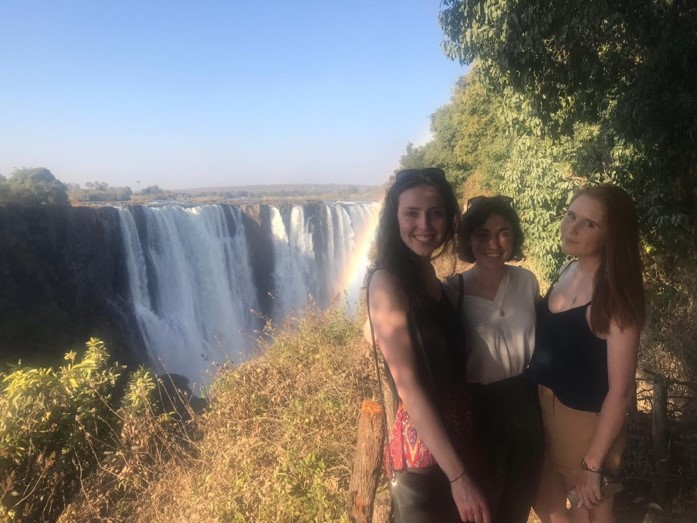
Our elective wasn’t all work work work but we filled our weekends with travel and exploring Zimbabwe. We visited the ruins of Great Zimbabwe, Mana Pools, Nyanga and at the end of the elective we made our way to Victoria Falls which was a huge highlight of the trip. The nurses and doctors helped us to organise some of our trips and advised us on nearby places to visit.
Overall, my experience as a medical student at MMH was far much better than I could have imagined and I just wish I could do more to repay the hospital for the experience that we were given. I can be sure that I will be returning to the hospital one day in the future when I’m qualified !
Louise Murray, Roisin Cullinan, Rochelle Dowding. 3rd year medical students Trinity College Dublin
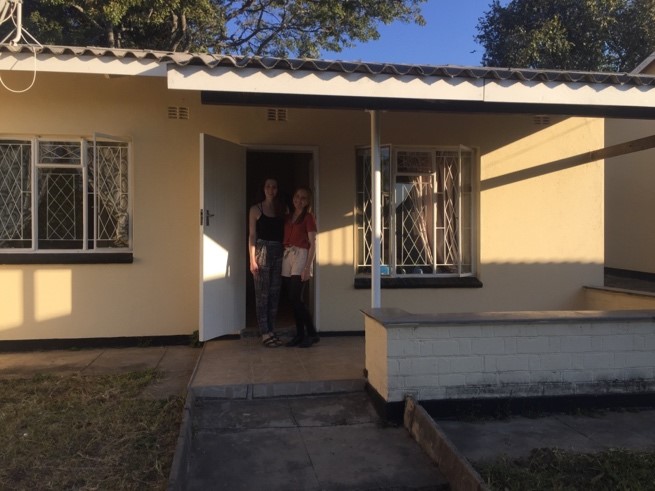
… The Guest House where we stayed
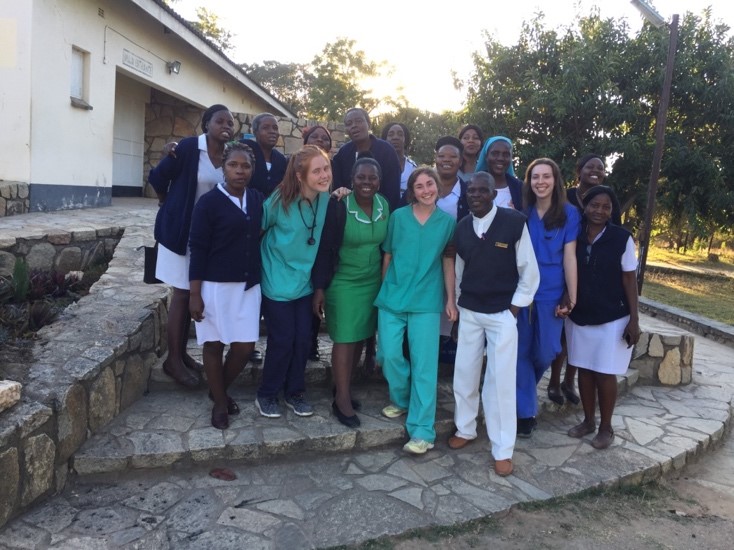
Us and some of the team …
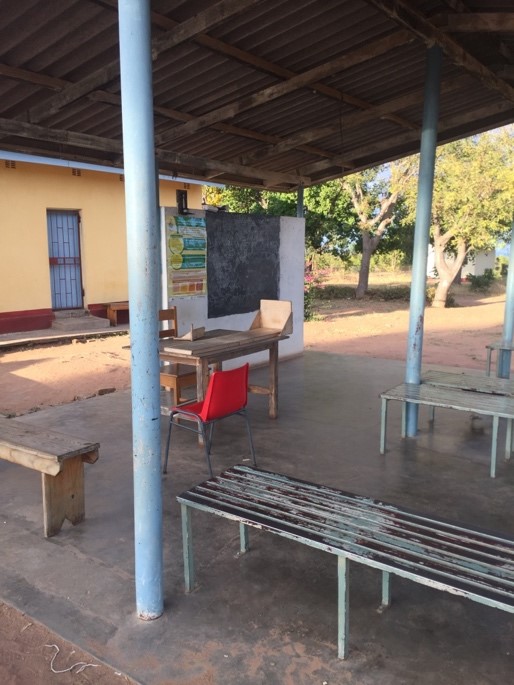
… One of the community clinics we went to visit
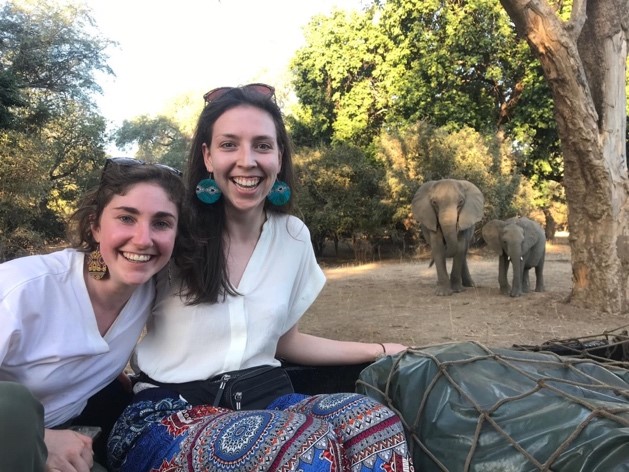
Our trip to Mana Pools where we got to see lots of animal including this mom and baby elephant …
…. The one and only Victoria Falls !
The hospital is supported by Friends of Murambinda Hospital (UK registered Charity 1073978) a network of supporters many of whom have worked in the past at the hospital.

